

Hand holding a phone showing AI app icons

Generative Engine Optimisation (GEO)

Mean more through better experiences.

Be part of the answer.

More and more searches now end with an answer rather than a list of links.

AI Overviews, AI Mode, ChatGPT, Gemini, Perplexity and other answer platforms find, interpret and summarise information before people ever reach a website. Generative Engine Optimisation (GEO) improves how your brand, expertise and content are discovered, understood and referenced in those answers.

At AgencyUK, GEO builds on strong SEO foundations. We connect the two, because people now discover brands across both traditional and AI search, and the same fundamentals serve both.

Hands over a tablet projecting an AI hologram

Why is GEO important for your business?

People now ask AI platforms to compare options, recommend suppliers and explain their choices, often before they visit a single website.

If those answers leave your brand out, or describe it using outdated or inaccurate sources, you can lose a place on the shortlist without knowing you were ever considered.

GEO makes your brand easier for AI platforms to understand and reference accurately, so you’re more likely to be included, and described correctly, when those recommendations are made.

Robotic hand reaching up against a blue sky

Two disciplines, one foundation.
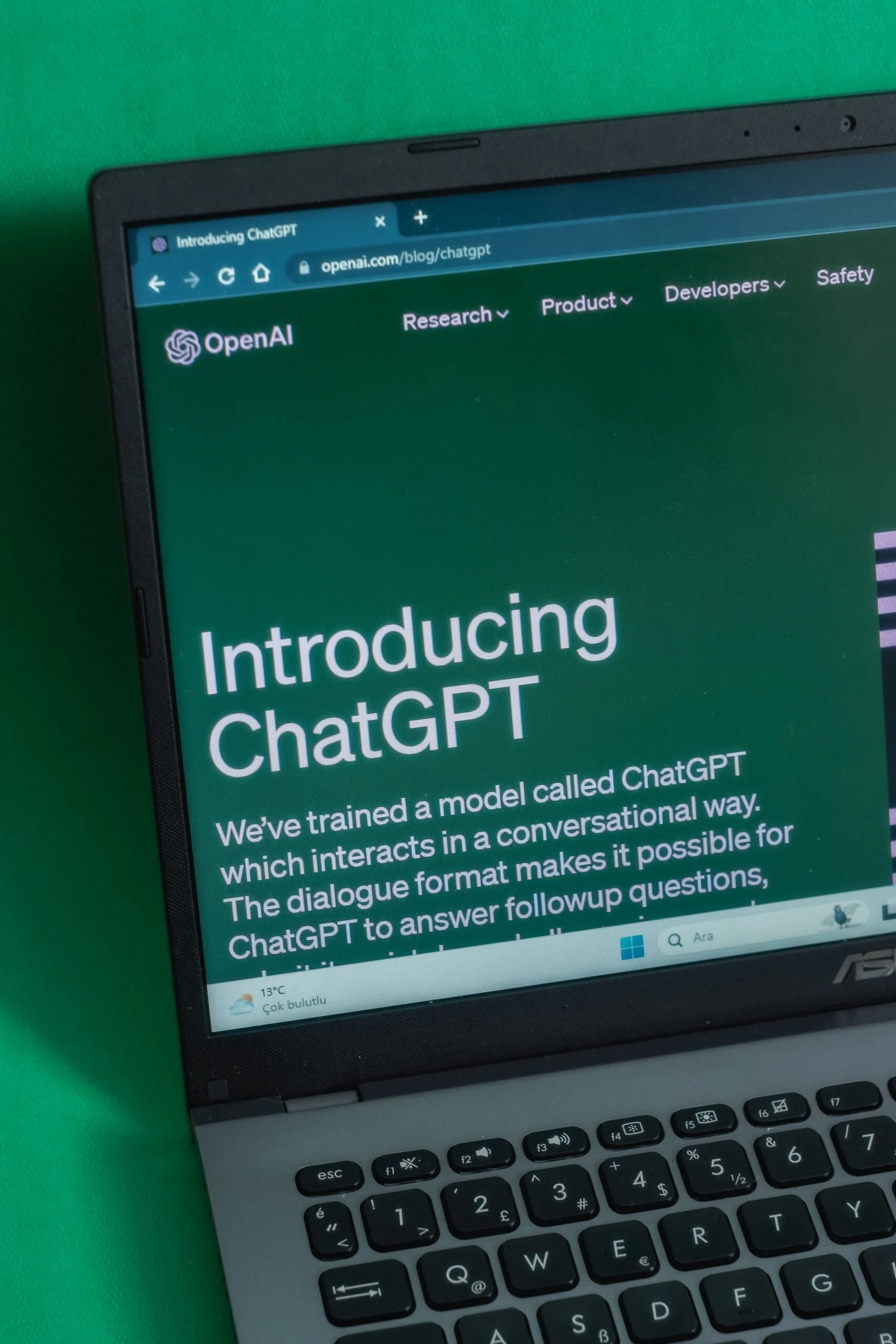
Laptop screen showing the Introducing ChatGPT page

GEO & SEO

The simplest way to think about GEO and SEO is where you’re trying to improve visibility.

SEO helps your website perform in traditional search results. GEO focuses on how AI-powered search and answer platforms discover, understand and reference your brand, expertise and content.

There’s considerable overlap. Both depend on strong technical foundations, authoritative content and clear signals about who you are and what you know, so we plan them together rather than as competing disciplines.

See how AI platforms describe you.

Person using a laptop showing ChatGPT

AI Visibility Tracking

You can’t improve what you can’t see.

We monitor the prompts and topics that matter to your business, looking at brand mentions, citations, competitors and the sources AI platforms use when they generate responses. That gives you a baseline for your AI visibility and shows where stronger content, authority or technical signals are needed.

AI results vary between platforms, prompts and users, so measurement isn’t as fixed as traditional rankings. We use tracking to find meaningful patterns and opportunities over time.

Make your brand easy for machines to understand.

Hand holding a phone showing AI app icons

Entities & Structured Data

AI systems need to know what your organisation is, what it does and who it serves, from the information available about it.

We use structured content, entities, schema and consistent brand information to make those facts clear, so your products, services and expertise are easier to interpret correctly.

The work is closely connected to technical SEO, and because our SEO specialists work alongside our developers, it can be built into the platform from the outset.

Answer the questions people ask.
Robotic hand reaching up against a blue sky

Content for AI Answers

AI platforms favour content that answers a question clearly and shows expertise.

We use search intent, audience questions and competitor intelligence to find the subjects your brand should own. Then we structure content so each answer is easy to find, understand and reference, while staying useful to the people reading it.

That includes service and product pages, guides, FAQs and thought leadership, connected so your expertise reads as a whole.

Give AI platforms reasons to reference you.
Hands over a tablet projecting an AI hologram

Authority & Citations

Visibility in AI answers depends on more than what you say about yourself.

We build topical authority through connected content, expert insight, original research and consistent mentions across the sources AI platforms trust.

Working alongside our Brand and Communications teams means that authority is built through thought leadership, campaigns and content as well as through search.

Measure what visibility is worth.

Laptop screen showing the Introducing ChatGPT page

AI Search & Traffic

AI Overviews and answer platforms can answer some searches directly, so people don’t always need to click through to a website.

That changes what successful search visibility looks like. It’s about increasing the likelihood that your brand and content appear when AI systems answer questions relevant to your market, as well as protecting clicks.

We look at organic traffic alongside search visibility, citations and commercial outcomes, so you can see the effect AI search is having on your business.

Fundamentals before shortcuts.

Person using a laptop showing ChatGPT

Technical Readiness

New techniques appear quickly in AI search, and not all of them matter.

An llms.txt file, for example, is a proposed way to give AI systems a clearer, structured view of a website’s useful content. It isn’t currently a requirement for appearing in AI search, and it isn’t a shortcut to greater visibility.

We prioritise the fundamentals first: accessible content, clear site structure, technical quality, authority and information AI systems can understand and reference. Where something like llms.txt supports that work, we’ll recommend it, but it won’t replace it.

Build the strongest foundations.

There are no shortcuts or guarantees to citations in large language models (LLMs) and answer platforms. Those outcomes are controlled by somebody else’s platform.

What we can do is build the strongest possible foundations for your brand to be understood, trusted and surfaced, then track what changes and keep improving.

Dog lying in the sunshine under a chair in the studio

Frequently asked questions.

How is GEO different from SEO?

The simplest way to think about GEO vs SEO is where you’re trying to improve visibility.

SEO helps your website perform in traditional search results. Generative engine optimisation (GEO) focuses on improving how your brand, expertise and content are discovered, understood and referenced by AI-powered search and answer engines.

There’s considerable overlap. Both benefit from strong technical foundations, authoritative content and clear signals about who you are and what you know. We connect SEO and GEO rather than treating them as competing disciplines, because people now discover brands across both traditional and AI search.

Can you track how our brand appears in AI search?

Yes. AI visibility tracking helps us understand whether, where and how your brand appears across relevant AI search and answer experiences.

We can monitor prompts and topics that matter to your business, looking at brand mentions, citations, competitors and the sources AI platforms use when generating responses. That creates a baseline for your AI visibility and helps identify where stronger content, authority or technical signals may be needed.

AI results can vary between platforms, prompts and users, so measurement isn’t as fixed as traditional rankings. We use tracking to identify meaningful patterns and opportunities over time.

Is AI search taking traffic away from our website?

It can. Features such as AI Overviews can answer some searches directly on the results page, which means users may not always need to click through to a website.

That changes what successful search visibility can look like. AI Overviews SEO is about increasing the likelihood that your brand and content are visible when AI systems answer questions relevant to your market, not just protecting clicks.

We look at changes in organic traffic alongside search visibility, citations and commercial outcomes to understand the impact AI search is having on your business.

Do we need an llms.txt file?

An llms.txt file is a proposed way for websites to provide AI systems with a clearer, structured view of useful content. It has attracted attention as GEO has developed, but it isn’t currently a requirement for appearing in AI search and shouldn’t be treated as a shortcut to greater visibility.

Whether it’s worth implementing depends on your website and wider GEO strategy. We prioritise the fundamentals first: accessible content, clear site structure, technical quality, authority and information that AI systems can understand and reference.

An llms.txt file may support that work, but it won’t replace it.

Ready to mean more?
Let’s have a conversation.

Leave your details below and a member of the AgencyUK team will get back to you as soon as possible